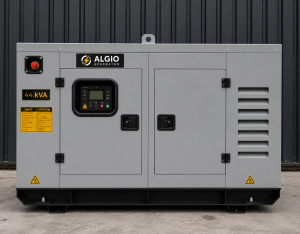
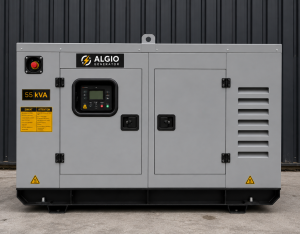
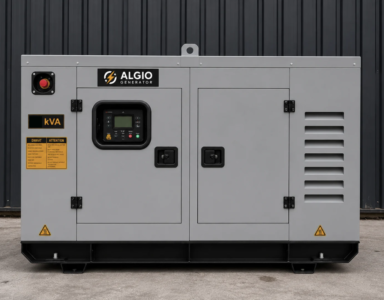
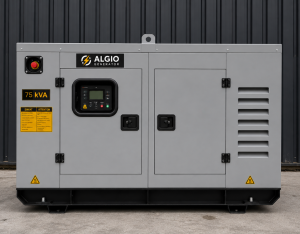
Generators vary in fuel type, capacity, design, operating mode, and intended use. Before making a choice, it is important to determine whether the generator will be used only during power outages or will be the facility's main source of power supply.
It is also important to consider how long the device will have to operate, what power the electrical appliances must provide, and how important the noise level is.
Diesel generators
Diesel generators Widely used in residential, commercial and industrial facilities where reliable backup or independent power supply is required.
The advantages of diesel generators are the availability of models of different capacities, designs suitable for different operating modes, and the possibility of their use on facilities with both small and significant electrical loads.
Such generators are used in hotels, clinics, restaurants, shopping malls, offices, warehouses, construction sites, and factories.
When selecting a diesel generator, the engine model, rated power, fuel consumption, cooling system, alternator, and maintenance requirements are particularly important.
The efficiency and working resource of a particular device depends on its technical characteristics, load, maintenance, and operating conditions.
Closed type diesel generators
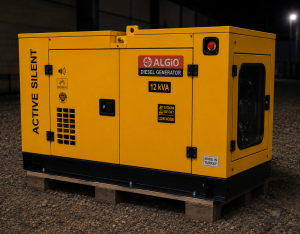
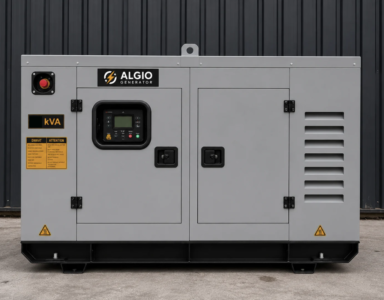
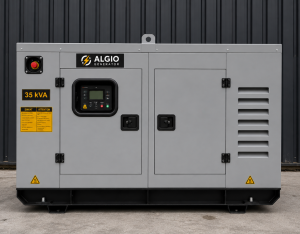
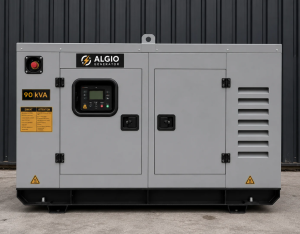
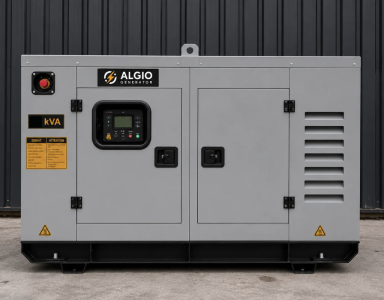
Enclosed diesel generators are housed in a special metal housing, which, if properly constructed, reduces noise during operation and somewhat protects the main components of the device from environmental influences.
Such a construction is especially practical for residential homes, hotels, office buildings, commercial facilities, and other spaces where noise control is important.
The housing houses the engine, alternator, cooling system, and related auxiliary components. Keyed doors and special access points are provided for maintenance.
The presence of an enclosed building does not mean that the generator can be placed in any space. Proper ventilation, safe exhaust removal, supply of air for cooling, and provision of maintenance space are essential.
The actual noise level should be assessed by referring to the technical documentation for a specific model.
Open type diesel generators
Open-type generators do not have a complete outer casing. Their engine, alternator, and major technical components are mounted on a common frame.
Such models are used in enterprises, technical rooms, construction sites, and in spaces where it is possible to provide appropriate engineering conditions.
The open design makes it easy to inspect and maintain the engine, filters, electrical components, and other parts.
At the same time, when installing an open-type generator, it is especially important to consider ventilation, noise, emissions, environmental conditions, and safety requirements.
The choice between closed and open-type generators should be made based on the technical conditions of the facility, budget, and intended use.
Gasoline generators
Gasoline generators are often used for relatively small electrical loads and intermittent use.
Such a generator can be a practical choice for a private home, a summer cottage, a small shop, a workshop, or for jobs where a temporary source of electricity is needed.
When selecting gasoline models, power, fuel tank capacity, estimated operating time, starting system, and output voltage characteristics should be evaluated.
Special attention should be paid to devices that are sensitive to voltage and frequency changes.
The choice between gasoline and diesel generators should not be based solely on initial price. Operating costs, frequency of operation, and load characteristics are also important.
Portable generators
The main advantage of portable generators is their portability and relatively compact design.
They can be used for outdoor work, summer cottages, temporary construction work, small workshops, and various locations where a permanent power supply is not available.
When choosing a portable generator, the weight of the device, fuel consumption, output power, voltage, and run time are important.
The small size of a generator does not mean that it is safe to use in enclosed spaces. Portable fuel-powered generators also need to be safely vented and comply with the manufacturer's instructions.
How to choose the power of a generator?
One of the key steps in properly selecting a generator is calculating the electrical power required for the facility.
To do this, first identify all devices that need to operate during a power outage. Then, their simultaneous consumption, starting currents, and operating modes are evaluated.
For example, lighting, a refrigerator, a heating boiler, a water pump, and internet devices may be important for a private home.
In the case of a hotel, additional work may be required for elevators, ventilation systems, kitchen equipment, and other infrastructure.
At an industrial facility, special attention is paid to electric motors, compressors, pumps, and production equipment.
Selecting a generator based on the exact current workload is not always sufficient. Some devices require significantly more power at the moment of switching on.
kVA and kW — what's the difference?
The power of generators is often specified in two units: kVA And kW.
kVA refers to apparent electrical power, while kW refers to active power.
The relationship between them is determined by the power factor — PF.
For example, if the generator power is 33 kVA and PF = 0.8, the corresponding active power is 26.4 kW.
Similarly, 55 kVA corresponds to 44 kW for the same ratio.
However, this mathematical correspondence does not change the technical passport of a specific generator. The working and reserve capacities must be verified against the manufacturer's data.
Why is starting current important?
Electric motor-powered devices often consume more current when switched on than during steady operation.
This is especially important in the case of elevators, water pumps, compressors, air conditioners, and some industrial machinery.
If the generator is selected only considering a constant load, a voltage drop or overload may occur at the moment the engine starts.
Therefore, when designing a power supply, not only the total power of the devices must be determined, but also their operating conditions.
A correctly performed calculation contributes to the stable operation of the generator and reduces the likelihood of unwanted shutdowns.
Single-phase and three-phase generators
Single-phase generators are used in appropriate single-phase electrical systems, where 220–230 volt devices are commonly found.
Three-phase generators are used in 380–400 volt electrical systems and to supply three-phase equipment.
When selecting a three-phase generator, special attention should be paid to the distribution of the load between the phases.
If the load on one phase is too high and the load on the others is too low, an imbalance may occur.
Therefore, along with selecting the generator capacity, it is necessary to evaluate the facility's electrical network and phase distribution.
ATS — Automatic Generator Transfer System
ATS (Automatic Transfer Switch) It is a system for automatic switching between power supply sources.
In the event of a power outage or a violation of relevant parameters in the network, a properly integrated system can initiate the generator start-up process.
When the generator reaches the required voltage and frequency, the switching device will transfer the load to the backup source.
After the main grid is restored, the system returns the load to the grid using the appropriate control algorithm and gives the generator a shutdown command.
ATS is especially important for hotels, residential buildings, offices, enterprises and other facilities where power supply must be restored automatically.
However, ATS does not mean an uninterrupted, zero-second supply of electricity. For devices that require immediate power in the event of a power outage, a UPS system may be additionally required.
When selecting an automatic transfer device, the number of phases, network parameters, maximum current, generator control capabilities, and electrical protection requirements should be considered.
Trusted engine brands
The diesel engine plays one of the main roles in the operation of the generator. It is the engine that generates mechanical energy, which is converted into electrical energy by the alternator.
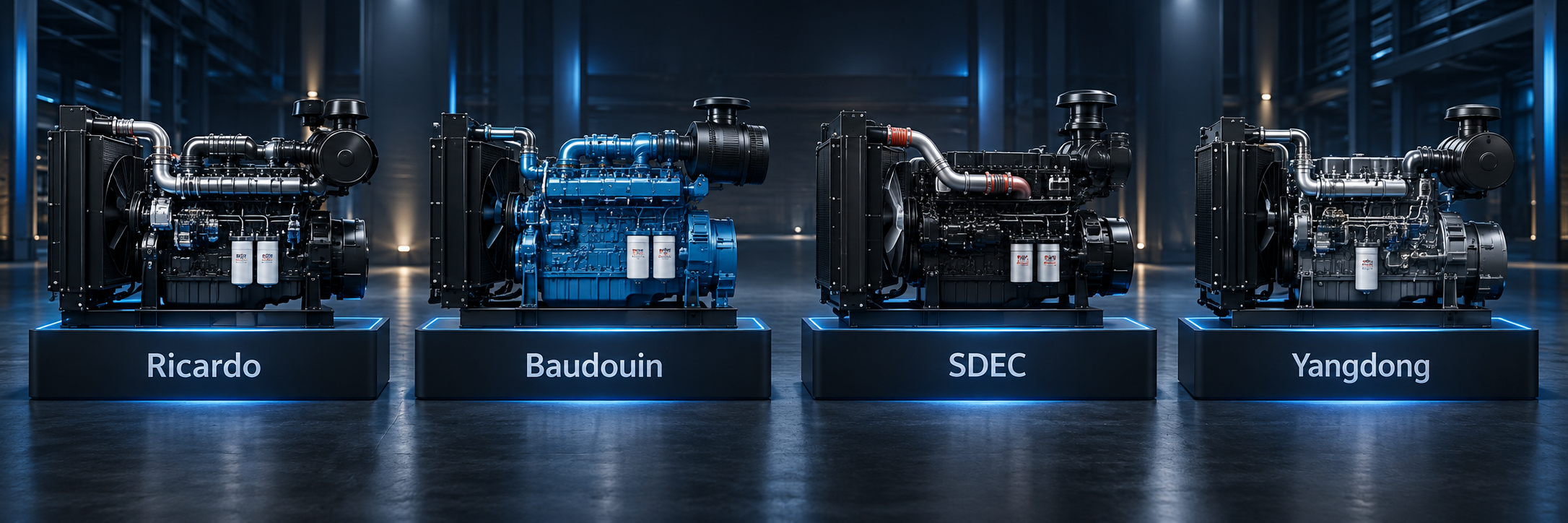
The ALGIO Generator range includes generators of various configurations, including Ricardo, Baudouin, SDEC, and Yangdong engines.
Each manufacturer's specific model varies in design, power, fuel consumption, and maintenance requirements.
Generators equipped with Ricardo engines
Various models of diesel engines manufactured by Ricardo are used in generator sets.
When selecting such generators, the exact engine model, rated speed, cooling system, and operating power are important.
The engine's technical resource and service conditions depend on the specific model and operating mode.
ALGIO Generator's Ricardo engine-powered generators allow the user to select the appropriate power unit based on the facility's requirements.
Baudouin engine-powered generators
Baudouin is a brand of engine manufacturers whose products are used in various industrial and energy applications.
When selecting a generator equipped with a Baudouin engine, it is necessary to evaluate the load mode, power class, fuel consumption, and service intervals.
It is especially important to familiarize yourself with the technical documentation for a specific engine, as different models from the same manufacturer may have significantly different characteristics.
Generators equipped with SDEC engines
SDEC engines are used in various industrial and generating installations.
Generators equipped with such engines can be selected for commercial and industrial facilities of appropriate capacity.
When evaluating a specific model, load, engine speed, cooling system, fuel consumption, and alternator compatibility should be considered.
Generators equipped with Yangdong engines
Yangdong diesel engines are used in various small and medium-sized generator sets.
When selecting such generators, the exact engine model and its compatibility with the total power of the alternator and generator are important.
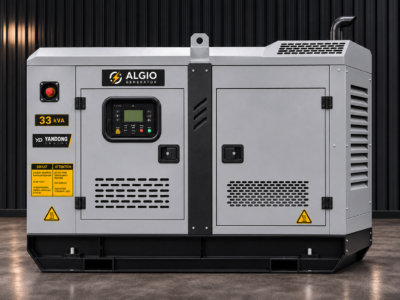
For example, when evaluating a 33 kVA class Yandong generator presented in the ALGIO catalog, its operating and backup power, electrical parameters, and configuration should be determined.
Along with the name of the engine manufacturer, the technical passport of a specific machine is of particular importance.
Alternator and generator electrical characteristics
One of the main components of the electrical part of the generator is the alternator, which converts the mechanical energy supplied by the engine into electrical energy.
When selecting an alternator, the rated power, voltage, frequency, insulation class, and other technical specifications are important.
Attention is also paid to the voltage regulation system and the generator's response to load changes.
Proper engine and alternator matching is essential for the generator to operate efficiently.
When powering important electrical devices, it is necessary to select a configuration that meets the requirements of their manufacturers.
Where are generators used?
The scope of application of generators is wide. A generator of the same capacity may be suitable for different purposes, but the final selection always depends on the specific load.
Generators for private homes
A backup generator for a private home can provide lighting, a heating system, a refrigerator, a water pump, and other necessary appliances.
The power required depends on the home's electrical system and the devices that need to operate simultaneously.
Generators for hotels
Power outages in hotels can disrupt lighting, elevators, water supply, ventilation systems, and other infrastructure.
When selecting a generator, it is important to determine which systems need to operate during an outage and how quickly power needs to be restored.
Generators for residential buildings
For multi-apartment residential buildings, a generator can be used to provide backup power for elevators, common lighting, water pumps, and other common-purpose systems.
The power supply of elevators requires special calculations. The motor starting mode, control system, load synchronization, and appropriate protection devices must be taken into account.
Generators for clinics
In clinics and medical centers, it is important to have backup power supply for essential infrastructure.
Some critical equipment may require an additional UPS system, appropriate electrical protection, and a specially planned power supply scheme.
Generator use must comply with facility safety requirements.
Generators for enterprises
Power outages at production facilities can cause technological process shutdowns and production delays.
When selecting a generator for such facilities, a detailed analysis of production equipment, electric motors, compressors, and other consumers is necessary.
Generators for construction sites
During construction work, generators are often used where a constant power supply is not yet available.
The required power is determined by the requirements of construction equipment, power tools, and other devices.
Generator installation and safety
The safe operation of a generator depends not only on the quality of the device, but also on the proper installation and operation of the electrical system.
During installation, it is important to select appropriate power cables, protective devices, grounding system, and switching scheme.
It is also necessary to correctly determine the location of the generator. Attention should be paid to air supply, cooling, exhaust ventilation, and space required for maintenance.
A fuel-powered generator should not be used in a living room, basement, or poorly ventilated enclosed space.
Generator exhaust contains carbon monoxide, a poisonous gas that can be life-threatening if inhaled.
The generator requires a solid and appropriate foundation, vibration control, and proper protection from environmental conditions.
After installation is complete, the electrical connections, switching system, and generator operation should be checked under appropriate conditions.
Generator maintenance
Regular maintenance is essential for the reliable operation of the generator.
Maintenance may include checking the condition of the engine oil, fuel and air filters, cooling system, battery, electrical connections, and control panel.
In the case of a backup generator, it is important to periodically start it up and check its operation according to the manufacturer's instructions.
Visual inspection alone is not always enough, as some faults are revealed during loading.
The frequency of service depends on operating hours, environmental conditions, and the instructions for the specific model.
For more information, please read on. ALGIO Generator services.
Generator prices in Georgia
The price of a generator depends on various technical and commercial factors.
These include power, fuel type, engine manufacturer, alternator, control system, body type, and additional equipment.
The final cost may be affected by transportation, installation, ATS system, and engineering requirements of a specific facility.
When choosing a generator, it is advisable to evaluate not only the purchase price, but also the costs of subsequent operation and maintenance.
Accordingly, to understand the cost of the desired model, it is important to clarify the generator's configuration and conditions of use.
Why ALGIO Generator?
ALGIO Generator is focused on offering power supply solutions suitable for residential, commercial and industrial facilities.
Our approach is based on assessing user needs and selecting the appropriate technical solution.
Service areas include:
-
Selection of generator type and capacity;
-
Electrical load assessment;
-
Determining the appropriate set-up;
-
Generator supply;
-
Professional installation;
-
ATS system integration;
-
Launching and checking;
-
Periodic technical maintenance;
-
Consultation on spare parts and technical support issues.
It is important for the user that the generator works properly when needed. That is why the selection, installation and subsequent maintenance of the device should be considered as a single integrated process.
Warranty terms, delivery times, and additional services are determined by the specific model and agreement.
Professional installation and support
Purchasing a generator is just one step in setting up a power supply system.
Then it is important to properly position the generator, connect it to the electrical grid, select protection devices, and check its operation.
If automatic transfer is required, the ATS parameters and compatibility with the generator control system must be additionally determined.
Technical support and regular servicing help maintain the equipment's working condition.
A properly planned power supply system reduces the likelihood of unforeseen problems and allows customers to better manage the risks associated with power outages.
Frequently Asked Questions About Generators
How many kVA generator do I need for my home?
The required power depends on the total load of simultaneously connected devices, the starting current of the electric motors, and the desired power reserve. For accurate selection, it is necessary to calculate the electrical load.
What is the difference between diesel and gasoline generators?
The main differences are engine design, fuel type, operating mode, consumption, and maintenance requirements. The choice should be based on frequency of use, load, and operating conditions.
How much fuel does a diesel generator consume?
Fuel consumption depends on the generator engine, power, load, and operating mode. Exact figures should be estimated from the technical passport of a specific model.
Is it possible to automatically turn on the generator?
Yes, using an appropriate control system and ATS device, it is possible to organize automatic switching to a backup power supply.
How long can a generator run continuously?
The duration of operation depends on the fuel supply, the generator's operating mode, the load, and the manufacturer's instructions. Not all models have the same limitations.
How long has the generator been in operation?
The working resource of the device depends on the design of the engine and other components, operating hours, load, and the quality of maintenance. There is no universal indicator of the exact resource.
What is the difference between primary and backup capacity?
Prime and Standby capacities describe different operating modes. The conditions for their use are determined by the technical documentation of a specific generator.
Is it possible to power multiple buildings with one generator?
It is possible with appropriate engineering design and electrical load calculations. It is necessary to correctly select the network configuration, protection and switching systems.
How often does a generator need servicing?
The service interval depends on the manufacturer's instructions, operating hours and operating environment. The engine oil, filters, cooling system, battery and electrical components are checked periodically.
How much does it cost to install a generator?
The installation price depends on the generator's capacity, location, cable length, electrical grid condition, and the need for additional systems.
ALGIO Generator — Reliable energy for your home and business
If you are looking for a generator for a residential home, hotel, office, commercial space, or industrial facility, ALGIO Generator will help you select the appropriate capacity and configuration.
Our goal is to offer customers a practical, technically sound and needs-based solution that ensures the proper organization of backup or independent power supply.
When choosing a generator, reliable technical data, correct calculations, safe installation, and the possibility of subsequent service are important.
Contact us To receive an individual offer and select the appropriate generator from the ALGIO Generator catalog
Generators — Additional information and useful links
In the ALGIO Generator catalog you can choose Diesel generators For residential, commercial and industrial facilities. To select generators of various capacities, check out our Generator catalog.
For the correct selection of generators, power, operating mode and safe installation are important. For more information, see ALGIO services Or Contact us To receive an individual offer.
Technical standards and safety of generators
Information on generator power classification and operating modes is provided. ISO 8528-1 international standard.
Discusses safety requirements for generators ISO 8528-13:2026 standard.
It is important to prevent carbon monoxide poisoning when using fuel-fired generators. See safety recommendations. On the official CDC website.